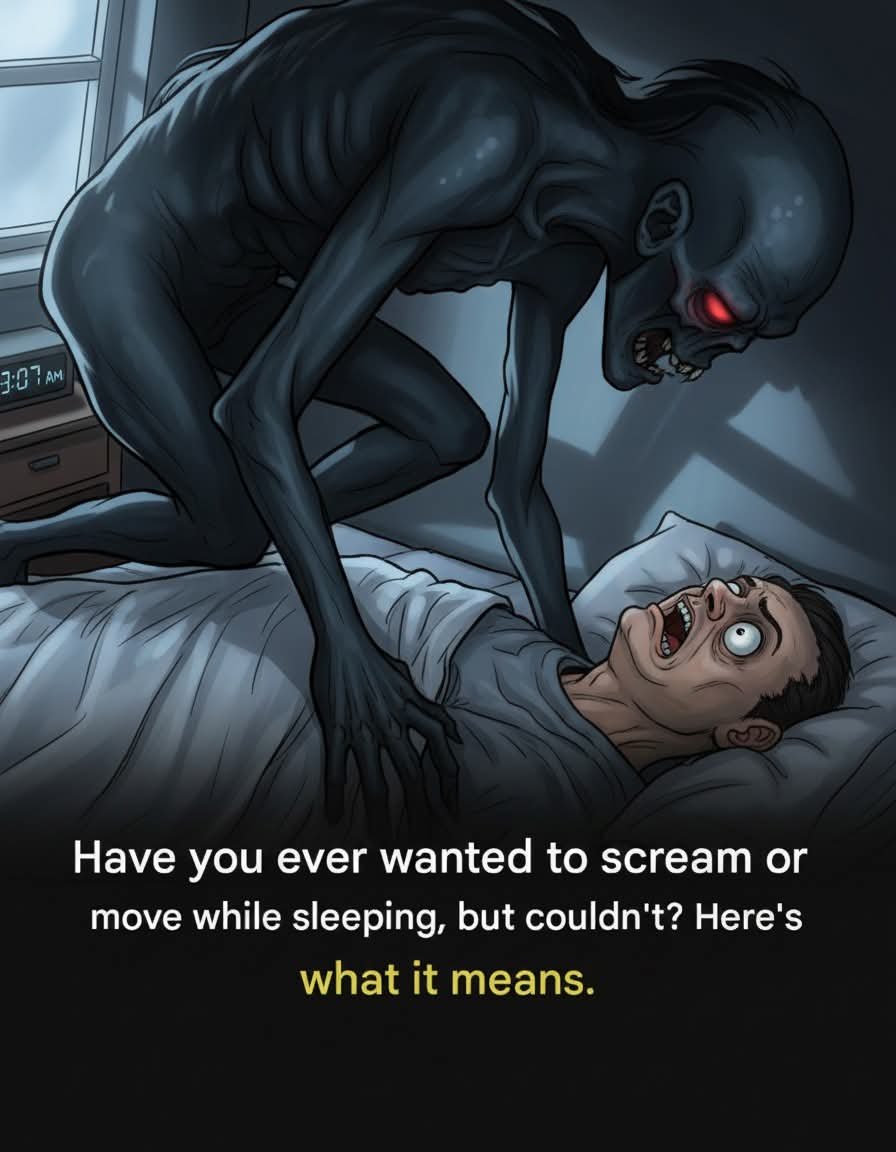
The image depicts a dramatic scene of a shadowy, alien‑like figure looming over a man lying in bed, with the caption: “Have you ever wanted to scream or move while sleeping, but couldn’t? Here’s what it means.”
Understanding the Phenomenon in the PictureThe illustration is a visual representation of sleep paralysis, a common sleep disorder that occurs when a person is conscious but unable to move or speak while falling asleep or waking up. During an episode, the brain is awake and aware of its surroundings, yet the body remains in the paralyzed state typical of REM sleep, preventing voluntary movement. This can trigger intense fear, hallucinations (often of threatening figures like the monster in the image), and the feeling of being unable to scream or escape.
Key Features of Sleep Paralysis- Immobility: The person is aware but cannot move their muscles.
– Hallucinations: Vivid, often frightening images or sensations (the “monster”) can accompany the episode.
– Duration: Episodes usually last from a few seconds to a couple of minutes.
– Triggers: Stress, irregular sleep schedules, sleep deprivation, or sleeping on your back can increase the likelihood.
What It Means for YouExperiencing sleep paralysis isn’t usually a sign of a serious medical condition, but frequent episodes may indicate underlying sleep issues or stress that should be managed. Techniques like maintaining a regular sleep routine, reducing stress, or sleeping on your side can lower the frequency of episodes. If the experiences are recurrent or cause significant distress, consulting a sleep specialist is advisable for personalized evaluation.
Turning the Fear into InsightThe dramatic monster in the image symbolizes how the brain can create terrifying hallucinations during sleep paralysis, making a normal physiological event feel supernatural. Understanding the science behind it can demystify the experience, helping sufferers recognize that the “monster” is a product of their own mind in a temporary sleep state.
Want to know more about practical tips to reduce sleep‑paralysis episodes or its connection to other sleep disorders?
