The Spiritual Meaning Of Waking Up At 1AM, 2AM, 3AM, 4AM, And 5AM…..See More>
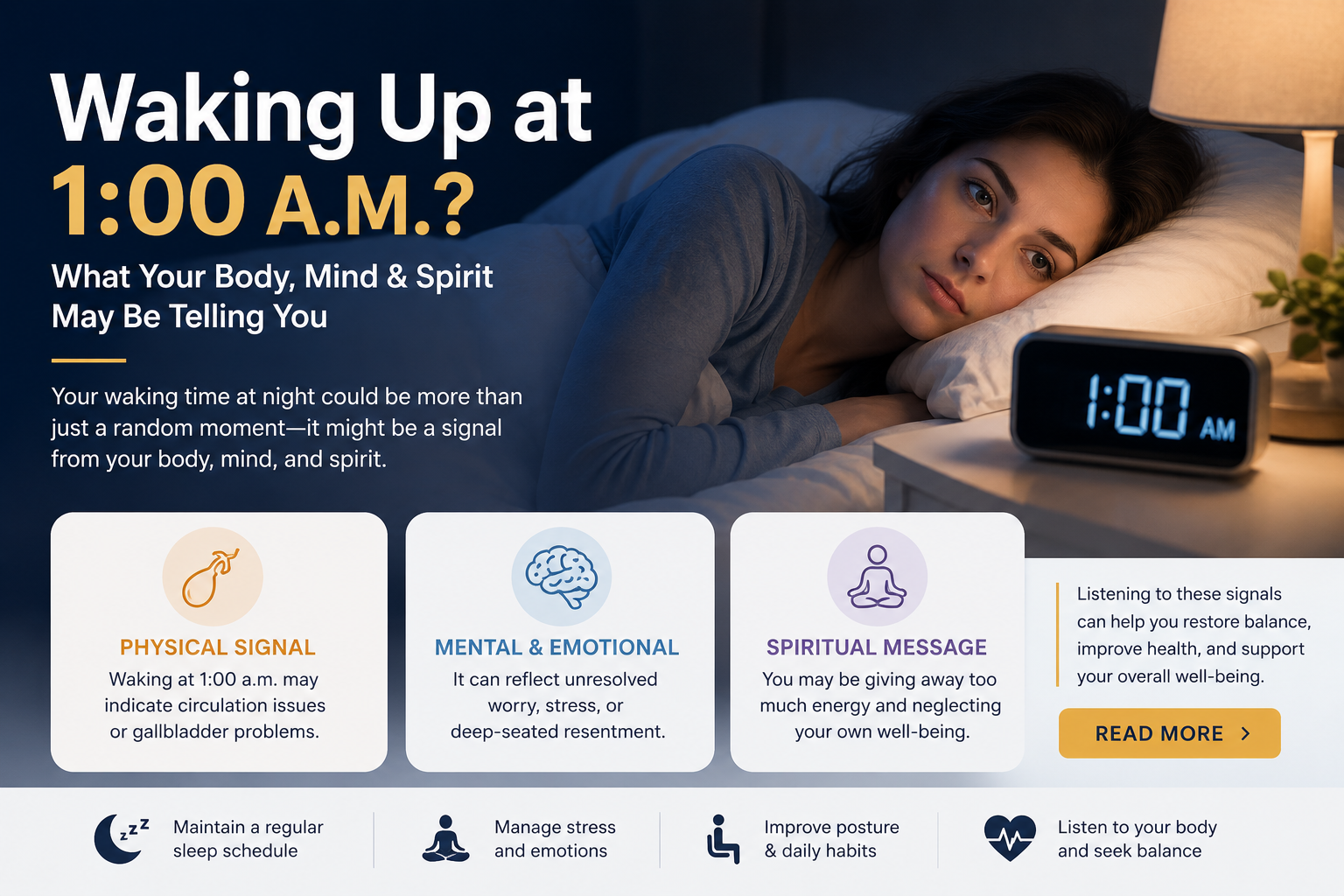
Infographic showing what happens when anyone wakeup at 10 AM

For instance, waking up at 1:00 a.m. may signal circulation or gallbladder problems. On a mental level, it can reflect unresolved worry or resentment. Spiritually, it suggests a person may be giving away too much of their energy without taking time to replenish it, often relying too heavily on external validation. Though not all meridian-related disturbances are spiritual, many blend physical, mental, and emotional causes. The patterns can serve as useful signals—offering insight into which aspects of health or life might need attention or healing. Understanding this rhythm can help bring awareness to areas of imbalance or internal conflict. In conclusion, paying attention to your waking times at night may provide valuable clues about your physical and emotional health. Using the meridian clock as a guide, one can explore deeper layers of wellness, energy balance, and spiritual growth. Read More>

7. Young Man Hospitalized Because He Dropped His Ca…See More……

A recent medical case in Isfahan has brought new attention to Dropped Head Syndrome (DHS)

A recent medical case in Isfahan has brought new attention to Dropped Head Syndrome (DHS) — a rare and often misunderstood neuromuscular disorder. The case involved a 23-year-old man who developed severe weakness in his neck muscles, leaving him unable to hold his head upright. Doctors described his condition as a “fixed forward-bending posture,” a symptom that can drastically affect mobility, communication, and even breathing. Dropped Head Syndrome occurs when the neck extensor muscles lose strength, often due to underlying neurological or muscular diseases such as myasthenia gravis, ALS, or Parkinson’s disease. However, doctors also note that lifestyle factors — including long hours of poor posture, stress, or muscle strain — may contribute. In this case, no spinal injury was found, leading experts to link the cause to neuromuscular dysfunction. Treatment for DHS focuses on restoring mobility and quality of life through physical therapy, posture correction, and nutritional support. In severe cases, surgery may be considered, but early intervention is key. Physicians emphasize that even young people should not ignore symptoms like neck fatigue, stiffness, or a gradual forward tilt, as early diagnosis greatly improves recovery prospects. Doctors hope this case will raise awareness about neck and spinal health — especially among students and office workers who spend long hours on screens. Maintaining good posture, exercising regularly, and seeking prompt medical advice can make a significant difference. The Isfahan case serves as a reminder that muscular health, emotional balance, and preventive care are all vital for long-term well-being. Read  More>>>