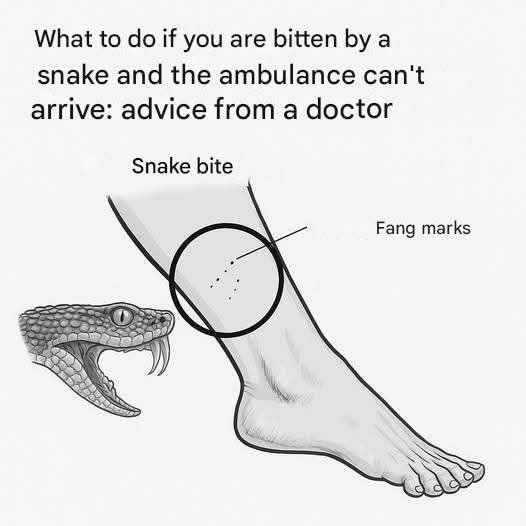
Staying Safe: What to Do If You’re Bitten by a Snake and an Ambulance Can’t Get There….
Snake bites can be life-threatening and require immediate medical attention. However, there may be situations where you’re in a remote area and an ambulance can’t reach you quickly. Knowing how to respond can make a significant difference.
Stay Calm- Keep panic at bay: Panicking increases heart rate, which can spread venom faster. Stay as calm as possible and think clearly.
Immediate Steps1. Move to safety: Get away from the snake to avoid further bites. Move to a safe location without running.
2. Remove constrictive items: Take off tight clothing, watches, or jewelry near the bite area, as swelling may occur.
3. Keep the affected limb still: Immobilize the bitten area with a splint or bandage to reduce venom spread.
4. Position the bite below heart level: If possible, sit or lie down with the bite area below heart level to slow venom spread.
What Not to Do- Don’t try to suck out venom: This method is ineffective and can cause more harm.
– Don’t apply a tourniquet: Tourniquets can cut off blood flow and cause tissue damage.
– Don’t use ice or heat: Extreme temperatures won’t help and may cause additional damage.
– Don’t cut the wound: Cutting can lead to infection and doesn’t effectively remove venom.
First Aid Measures1. Clean the bite area: Gently wash the bite with soap and water if available.
2. Apply a pressure bandage: Use a bandage to apply firm pressure, similar to wrapping a sprain. Wrap the bandage from the bite area towards the heart, but not too tight to cut off circulation.
3. Monitor vital signs: Keep track of breathing rate, pulse, and consciousness. If possible, note the time of the bite and describe the snake (without chasing it).
Getting Help- Call for help: If you have a phone signal, call emergency services or alert someone nearby to get medical help.
– Identify the snake (if possible): If it’s safe to do so, take a photo or note the snake’s color, shape, and size. This can help medical professionals determine the type of venom and treatment.
While Waiting for Help- Stay hydrated: Drink water if available, but avoid caffeine or alcohol.
– Stay still: Minimize movement to slow venom spread.
– Keep the affected area below heart level: This can help slow the spread of venom.
Key Points- Time is critical: Snake bites can be life-threatening. Getting to a medical facility as quickly as possible is essential.
– First aid is temporary: These measures are meant to help until professional medical help arrives.
What Medical Professionals Will Do- Administer antivenom: This is the most effective treatment for venomous snake bites.
– Monitor and treat symptoms: Medical teams will monitor vital signs and address symptoms accordingly.
Prevention- Be prepared when outdoors: Wear protective clothing, stay on marked trails, and avoid tall grass or wooded areas where snakes may hide.
– Learn about local snakes: Knowing which snakes are venomous in your area can help you take precautions.
