🚨Breaking News🚨 13 countries join forces to attack…see more
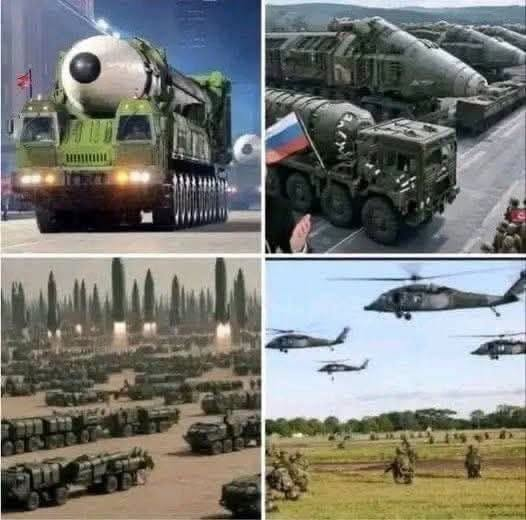
The cobblestone streets of Brussels, often associated with bureaucratic lethargy and diplomatic finesse, have begun to pulse with a rhythm more akin to a command center than a trade hub. For decades, the European Union operated under the comforting umbrella of “The End of History,” a philosophy suggesting that economic integration and liberal democracy had rendered large-scale kinetic warfare an archaic relic. However, the full-scale invasion of Ukraine by Russia, coupled with a dramatic shift in the geopolitical winds blowing from Washington, has shattered that complacency. Today, the continent is gripped by a singular, urgent realization: the era of peace was a luxury, and that luxury has expired. Europe is now racing against a ticking clock to rebuild its military, industrial, and psychological foundations before the next storm breaks. Multilateral Organizations The shift in rhetoric from European capitals is as stark as it is consistent. While diplomacy was once the first and only tool in the box, military readiness has become the primary directive. This urgency is fueled by a terrifying consensus among intelligence agencies and defense ministers. Boris Pistorius, Germany’s Defense Minister, recently warned that Europe may have witnessed its “last summer of peace.” This sentiment is echoed by NATO Secretary General Mark Rutte, who has been uncharacteristically blunt in stating that Russia’s sights are already set beyond the borders of Ukraine. The consensus is that an attack on NATO territory is no longer a “what if” but a “when,” with many analysts pointing to a window as short as five years. Vladimir Putin’s own declarations—noting that Russia is prepared for a fight and warning that the time for negotiation is passing—have only served to validate these fears. Yet, as Brussels accelerates its military planning, it faces a profound and dangerous obstacle: the reluctance of its own citizens. A massive disconnect exists between the strategic maneuvers of EU leaders and the sentiments of the European public. Recent polling data suggests a continent deeply hesitant to take up arms. In a survey of nearly 10,000 respondents across the EU, a staggering 75% stated they would not be willing to fight to defend the union’s borders. Only a meager 19% expressed a readiness to serve. While concern about Russian aggression is palpably high in frontline states—reaching 62% in Denmark and 57% in Lithuania—the broader European population seems more preoccupied with the secondary effects of war, such as energy security and economic collapse, rather than the primary act of national defense. This “readiness gap” presents a strategic nightmare for Brussels, which is attempting to build a fortress on a foundation of public ambish. In response, Eastern Europe has taken the lead, reviving Cold War-era civil defense protocols with a modern twist. Countries like Poland, Finland, and Sweden are not waiting for a centralized EU directive to prepare their people. Sweden has taken the extraordinary step of mailing “If Crisis or War Comes” brochures to every single household, a move designed to transition the public mindset from peace to resilience. In Lithuania, the government has begun constructing “drone walls” and intentionally restoring wetlands to serve as natural defensive barriers. Perhaps most telling is the shift in education; in Latvia and Poland, firearms safety and national defense are being integrated into school curriculums. The digital landscape reflects this anxiety, with surges in search queries for the nearest bomb shelters and evacuation checklists, indicating that while the public may be unwilling to fight, they are beginning to realize they must prepare to survive.Geographic Reference Behind the closed doors of the European Commission, the financial and logistical machinery is being completely rewired. European defense spending surpassed €300 billion in 2024, but even that massive sum is being eclipsed by future projections. The “Readiness 2030” roadmap is the most ambitious coordination effort in the EU’s history. It aims to solve the “Military Schengen” problem—the bureaucratic and physical hurdles that prevent troops from moving quickly across borders. The goal is to allow heavy military equipment to move across the continent within six hours during an emergency, down from the days or weeks it currently takes. To facilitate this, the EU is identifying 500 critical infrastructure points—bridges, tunnels, and ports—that require massive upgrades to support the weight of modern armored divisions. The price tag for this logistical overhaul is estimated at upwards of €100 billion. To fund this transformation, the EU launched “ReArm Europe,” a central platform designed to end the fragmentation of the continent’s defense industry. Historically, Europe has been plagued by duplicated efforts, with different nations using incompatible weapons systems and procurement processes. “ReArm Europe” utilizes two massive financial engines: the European Defence Industry Programme (EDIP) and the Strategic Armament Financing Envelope (SAFE). The latter is a €150 billion loan facility that allows member states to pool their resources and purchase weapons at a lower cost and higher speed. The early demand for these funds has been overwhelming, with requests already flooding in for air defense systems, drones, and long-range missiles. This frantic activity is being pushed along by a growing sense of abandonment by the United States. Recent national security strategies from Washington have adopted an “America First” posture, describing Europe as a “weakened partner” rather than an equal ally. The U.S. has made it clear that it expects Europe to handle the vast majority of its own conventional defense by 2027. This shift has ignited a fierce debate over “strategic autonomy.” Leaders like Council President António Costa and foreign policy chief Kaja Kallas have pushed back against U.S. interference in European political choices, but the reality remains: Europe can no longer bank on unconditional American security guarantees. The Hague summit’s agreement to aim for 5% GDP spending on defense by 2035 is a testament to this pressure, though many countries are still struggling to meet the current 2% NATO baseline.Politics Ultimately, the challenge for Brussels is not just about money or steel—it is about time. Decades of underinvestment and the dismantling of the defense industry cannot be reversed in a single budget cycle. Regulatory … Read more

Brad Pitt’s Three Daughters, Zahara, Vivienne, & Shiloh, Opt for New Names…see more>

Zahara, formerly known as Zahara Jolie-Pitt, eldest among the siblings, has entered a fresh phase in her life by becoming an official member of the Alpha Kappa Alpha organization at Spelman College in Atlanta. Notably, she has opted to shed the surname “Pitt” in this transition. (Photo by James Devaney/WireImage) In a captivating video shared by Essence, Zahara exuded vibrant energy and confidence as she introduced herself during her sorority’s probate ceremony. Clad in a chic black midi dress, gloves, and pearls, she proudly announced, “My name is Zahara Marley Jolie, hailing from the Golden State in the city of angels, Los Angeles, California. I represent the seventh position in this line.” Fans couldn’t help but notice the absence of “Pitt” from her name during this significant moment. Some expressed disappointment, suggesting that Brad’s influence could have shaped her life differently. Others questioned the scrutiny Brad faced, wondering why he was being held accountable. (Photo by James Devaney/WireImage) A cautious sentiment also emerged among comments, emphasizing the importance of Zahara’s autonomy in her decision-making, particularly regarding familial ties post-divorce. (Photo by Karwai Tang/WireImage) As Zahara embarks on this new chapter, her choice of name prompts introspection on the intricacies of family dynamics following her parents’ separation. Meanwhile, Vivienne Jolie-Pitt, one of the twins, has reportedly altered her name amid her parents’ legal disputes. Born in 2008, Brad expressed profound joy at their birth, as recalled by OB/GYN Dr. Michel Sussman. (Photo by James Devaney/GC Images) Now at 15, Vivienne is exploring her artistic talents with strong support from her mother. Notably, she was listed as “Vivienne Jolie” in the Playbill for the musical “The Outsiders,” marking a significant shift in her public identity, sans the surname “Pitt.” (Photo by James Devaney/WireImage) In the world of theater, Vivienne Jolie takes on the role of a production assistant while her mother, Angelina, serves as the producer. (Photo by Bruce Glikas/Getty Images) Often seen accompanying her mother on the promotional tour for the musical, Vivienne’s involvement reflects her deep interest in the project’s themes of family. During a recent appearance on “Today,” Vivienne was spotted among the audience, watching her mother with evident pride. Angelina shared that Vivienne’s passion for the production stems from its emphasis on family values, a sentiment that resonates strongly with both of them. Prior to their promotional endeavors, mother and daughter were spotted attending a preview of the musical in New York City. This public outing marked a significant appearance for Vivienne, her first since 2021, drawing considerable attention from fans and media alike. (Photo by Robert Kamau/GC Images) (Photo by JC Olivera/Getty Images) Meanwhile, Shiloh Jolie-Pitt, who recently celebrated her 18th birthday on May 27, has taken a significant step in asserting her adulthood. She has filed legal documents to drop her father Brad’s surname and adopt her mother Angelina’s surname, preferring to be known simply as “Shiloh Jolie.” (Photo by TIZIANA FABI/AFP via Getty Images) TMZ reported that Shiloh submitted the paperwork on Memorial Day, coinciding with her birthday. While the name change request is pending official approval, it’s expected to be finalized soon. (Photo by Samir Hussein/WireImage) Shiloh’s decision follows a pattern within the family, as her sisters Vivienne and Zahara have also reportedly opted to omit “Pitt” from their names on separate occasions. These changes come amidst ongoing legal proceedings suggesting Angelina’s possible influence on the strained relationship between the children and Brad. (Photo by David M. Benett/Dave Benett/WireImage) Recently, claims against Angelina surfaced through a statement from Tony Webb, owner of SRS Global, a security company that provided protection for Angelina. Webb, who worked with Jolie from 2000 to 2020, disclosed insights from his experience, including disturbing allegations regarding Angelina’s interactions with the children during custody visits. (Photo by LEON NEAL/POOL/AFP via Getty Images) The revelation sparked widespread reaction on social media, with many expressing dismay and concern over Angelina’s alleged actions and their potential impact on the children’s well-being. Some attributed Angelina’s behavior to her own turbulent upbringing, suggesting a cycle of behavior that she may struggle to break. (Photo by Kim VERMAAT / INTERNATIONAL CRIMINAL COURT / AFP) (Photo by KIM VERMAAT/INTERNATIONAL CRIMINAL COURT/AFP via Getty Images) (Photo by VALERIE MACON/AFP via Getty Images) (Photo credit should read STR/AFP via Getty Images) (Photo by Samir Hussein/WireImage) (Photo by Jun Sato/GC Images) (Photo by Jun Sato/WireImage) Despite public perception and criticism, Angelina Jolie has consistently prioritized her role as a nurturing mother to her children, drawing inspiration from the lessons imparted by her own mother, Marcheline Bertrand. In a candid revelation in 2011, Angelina emphasized the importance of fostering open communication and shared activities with her children, aiming to cultivate a strong familial bond grounded in love and understanding.,,, Read More>>>

6 Types of Warts (Signs, Symptoms, Home Remedies, and Treatment)….See More>

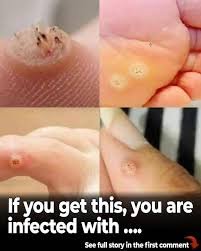
Have you ever looked down at your feet and spotted a small, fleshy bump that wasn’t there before? Maybe it is even a bit painful to the touch? If so, then you know what it’s like to discover that you have a wart. It’s okay, though – warts are actually a super common skin issue. While they can be a bit of a nuisance, they’re usually harmless. Still, you want to make sure you’re doing the right things to ensure you don’t spread them to anyone else, get rid of yours as quickly as you can, and prevent yourself from getting a new one. Read on to get to know these little bumps a little bit better. At its core, a wart is a small skin growth caused by a virus – the human papillomavirus (HPV). When the virus gets into your body through a tiny cut or scrape, it can cause the skin cells to grow rapidly on the surface, creating that familiar bumpy texture of a wart. Warts come in all shapes and sizes and can show up almost anywhere on your body. That being said, there are some types of warts that are more common than others. The following are the most common types of warts that people get. These are the classic warts, often found on hands and fingers. They have a rough, “cauliflower-like” surface. Usually they are fairly small, but they can grow if left untreated….. Read More>

What Happened After a Kansas Town’s Election Sparked an Unexpected Legal Review….Read More>>>….

In the days since the filing became public, the town has learned to live in a strange in-between. Mayor Jose Ceballos remains in office, signing documents, attending meetings, and standing at the center of a storm he did not publicly anticipate. City staff insist that services will not falter, yet every routine decision now carries an unspoken question: will this still matter if the court rules otherwise? Across Kansas, the case has become a proxy for deeper anxieties about who is allowed to participate in democracy and how the state verifies that right. Longstanding voter registrations, once assumed settled, suddenly feel fragile under modern verification systems. Some residents fear the process could be used to target individuals; others argue it is overdue accountability. For now, the town waits, suspended between a completed election and an unfinished judgment, knowing that whatever the ruling, the quiet trust they once had in the system will not return unchanged…. Read More>>>

Man Stretches His Arm — Doctors Say This Is What Actually Happened…..see more>

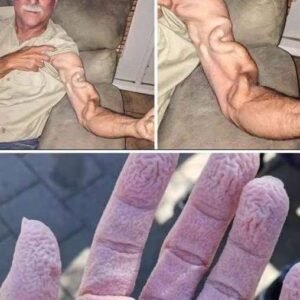
It started like any ordinary movement. A man lifted his arm to stretch, something he had done thousands of times before, when a sudden sharp pain tore through his upper arm. Within minutes, the pain was followed by swelling and a strange, unnatural bulge forming near his elbow. What looked like a twisted muscle quickly turned into something far more alarming. The image of his arm spread online, with many people convinced it was some kind of rare disease or freak injury. In reality, doctors say this dramatic-looking condition has a clear and well-documented explanation. The injury is known as a biceps tendon rupture, often referred to as the “Popeye deformity.” It happens when the tendon that connects the biceps muscle to the shoulder tears, allowing the muscle to bunch up lower in the arm. This creates the unmistakable bulge seen in the photo. While it can look horrifying, medical experts explain that it usually occurs during sudden force, heavy lifting, or even simple stretching if the tendon has weakened over time due to age or wear. Surprisingly, many people who suffer this injury don’t experience unbearable pain after the initial moment. Some even regain most of their arm function without surgery. Doctors say that while strength may be reduced, especially for lifting or rotating the arm, daily activities can often continue with physical therapy. However, ignoring the injury can lead to long-term weakness or complications, which is why medical evaluation is strongly recommended when symptoms appear suddenly. The second image circulating alongside the arm photo shows deeply wrinkled fingers, which confused many viewers even more. This condition, however, is completely unrelated. Those pale, pruned fingers are the result of prolonged exposure to water. Scientists explain that when skin is submerged, blood vessels constrict as part of a nervous system response, causing the skin to wrinkle. It’s not dehydration, aging, or disease — it’s actually a protective mechanism to improve grip in wet conditions. Together, these images created a perfect storm of online speculation. Some claimed the man was suffering from a rare genetic disorder, while others suggested nerve damage or circulation failure. In truth, both images show common biological responses that simply look extreme when captured at the right moment. Doctors emphasize that while these conditions appear dramatic, they are far more common than people realize. The takeaway is simple but important. Sudden changes in your body, especially sharp pain followed by visible deformity, should never be ignored. At the same time, not every shocking image points to a deadly condition. Understanding what your body is doing — and why — can prevent panic and help you seek the right care at the right time.

Breaking NewsFatal accident, leaving 19 people dead on the outskirts of…See more

State of Mexico.- This Wednesday, November 20, a multiple collision occurred on the Mexico-Querétaro Highway , at kilometer 059+000 in Huehuetoca, State of Mexico . The accident involved a trailer that, after being unable to stop in time, collided with several vehicles. As a result, the vehicle ended up across the road, occupying all three north-south lanes of traffic, causing a partial closure of the highway. Causes of the accident and traffic conditions The incident occurred as the trailer was traveling toward Mexico City . Failing to brake in time before the Jorobas intersection , the driver crashed into a bank and then struck five cars and a pickup truck . Due to the wet road conditions caused by the day’s rain , it is suspected that road conditions may have played a role in the accident, although authorities will investigate the cause. Injuries and safety recommendations Paramedics arrived at the scene to treat the injured , who had minor injuries. Although no serious injuries were reported , the paramedics recommended that some be checked out at the hospital to avoid possible complications. Read More>>>

Heartfelt Words Women Secretly Want to Hear From the One They Love….See More>

1. “You make me feel at peace.” When a woman hears this, it goes beyond simple appreciation — it’s emotional validation. Women often carry silent emotional weight: juggling responsibilities, managing expectations, and trying to keep everything in balance. When a man acknowledges that her presence brings calm rather than chaos, it speaks directly to her inner world. This phrase tells her she’s not just admired for beauty or effort, but for the energy she brings. It affirms that she’s not a source of stress, but of stability — something emotionally intelligent men understand to be deeply meaningful. It gives her confidence that her personality and compassion are noticed, not just her actions. In relationships, peace is the new version of passion. When a man links peace to his partner, it signals emotional maturity. It tells her, “You’re my comfort zone.” And for women who often nurture everyone else, being someone’s safe space feels like love in its purest form. 2. “I love the way your mind works.” Intellectual and emotional connection are deeply intertwined for most women. Compliments about appearance are nice — but when a man appreciates her thoughts, ideas, and creativity, it shows genuine interest. This phrase tells her that her intelligence and perspective are captivating. It’s not about flattery — it’s about respect. Acknowledging her opinions, even when they differ, builds trust. When she feels her mind is valued, she opens up emotionally. She’s more likely to share her feelings, dreams, and vulnerabilities because she senses her voice truly matters. This statement also reinforces equality. It says, “You’re not just someone I love — you’re someone I learn from.” And that shift from admiration to inspiration creates the kind of partnership that lasts far beyond surface attraction. 3. “I’m here — and I’m not going anywhere.” For many women, emotional safety is the foundation of love. This simple phrase carries reassurance that silence won’t mean distance, that conflict won’t mean goodbye, and that presence isn’t temporary. It represents emotional consistency — something far more powerful than grand romantic gestures. Women often crave emotional stability because it allows them to be vulnerable without fear of abandonment. Saying this line shows emotional reliability. It quiets her fears, strengthens her trust, and creates a deeper emotional rhythm between both partners. When a man verbalizes his commitment in this way, it also signals accountability. It’s not about being perfect — it’s about being present. And in long-term relationships, presence often means more than promises. 4. “You make me want to be a better man.” This phrase captures emotional growth and admiration simultaneously. It tells her that her influence is uplifting — that her kindness, patience, or inner strength inspires him to evolve. It’s not about obligation; it’s about admiration translating into motivation. For women, this kind of statement reinforces emotional impact. It tells her she’s not just loved — she’s transformative. When a man expresses that her presence brings out his best version, she feels seen on a soul level. This also deepens emotional intimacy because it shifts focus from external attraction to inner influence. It’s one of the most powerful things a partner can say — not because it flatters, but because it honors her emotional role in his personal growth. 5. “You’re enough — just as you are.” Perhaps the most healing phrase of all, these words can melt years of self-doubt and overthinking. In a world that constantly tells women to be more — more productive, more attractive, more successful — hearing “you’re enough” brings instant emotional relief. This line embodies emotional acceptance. It communicates that she doesn’t need to perform or perfect herself to be worthy of love. It tells her that being genuine is not only okay, it’s adored. When spoken sincerely, this phrase creates deep trust and self-assurance in the relationship. It reminds her that love doesn’t come with conditions, and that authenticity is what truly holds emotional gravity between two people. 6. “I trust you.” Few words carry more emotional weight in a relationship than these. “I trust you” means so much more than faithfulness — it’s about emotional reliability, judgment, and respect. When a man tells a woman he trusts her, he’s essentially saying, “I believe in your heart, your intentions, and your wisdom.” This statement speaks directly to a woman’s need for mutual respect. It shows that her thoughts are valued and her actions are not second-guessed. Trust gives her the freedom to express herself authentically without fear of being misunderstood or criticized. In many relationships, mistrust often begins with small doubts. But when a man consistently communicates trust, it dissolves insecurity. It allows both partners to operate from honesty, not fear. For a woman, hearing these words reinforces that she’s not just loved — she’s believed in, and that’s one of the purest forms of love. 7. “You inspire me.” This phrase transforms admiration into emotional partnership. When a woman hears that she’s an inspiration, it means her presence doesn’t just comfort — it uplifts. It acknowledges her strength, resilience, and the quiet ways she motivates those around her. Women often underestimate their influence. They do things out of love — offering emotional support, showing patience, keeping things together — without realizing how deeply it impacts their partner. When a man expresses that her energy inspires him, it’s not only romantic but empowering. It tells her that she’s not just part of his world — she shapes it. That her way of loving, thinking, or handling challenges is something worth admiring. It bridges respect and affection, turning the relationship into a space of shared motivation and mutual growth. 8. “I’m proud of you.” This phrase is one of the most underrated yet powerful expressions in love. For many women, being acknowledged for their effort — not just their results — is incredibly meaningful. When a man says, “I’m proud of you,” he’s recognizing her journey, not just her achievements. It shows attentiveness. It means he sees how hard she tries, how she manages emotions, responsibilities, or … Read more

Everything Changed in One Call, Savannah Guthrie Shaken as FBI Delivers Grim New Twist in Mothers Disappearance Case….See More>>>

For over a decade, Savannah Guthrie has served as the steady heartbeat of American morning television. As the co-anchor of NBC’s Today show, she has guided millions of viewers through the labyrinth of the twenty-first century’s most defining moments. Whether she was dissecting complex political maneuvers, reporting on the front lines of global health crises, or providing a compassionate shoulder for grieving families during national tragedies, Guthrie’s hallmark has always been her unwavering composure. She is a journalist built on the pillars of intellectual rigor and emotional intelligence, a rare professional who can pivot from hard-hitting legal analysis to lighthearted human-interest stories without losing her sense of self. To the public, she is a pillar of strength, the calm voice in the storm that begins every day with the promise of clarity and truth However, the nature of journalism often places a thin, transparent veil between the reporter and the reality they cover. On a Tuesday morning that began like any other, that veil was violently torn away. In a harrowing reversal of roles that no daughter is ever truly prepared for, Savannah Guthrie found herself no longer the narrator of the news, but the subject of a story so grim it threatened to unravel the very composure she has spent decades refining. The call that changed everything came not from a producer or a source, but from the Federal Bureau of Investigation, delivering a twist in a long-standing mystery that has haunted the periphery of her life: the disappearance of her mother. To understand the weight of this moment, one must understand the private struggle that Savannah has kept shielded from the bright lights of Studio 1A. While she was asking tough questions of world leaders and celebrating the triumphs of everyday heroes, she was also living with a quiet, persistent ache. The disappearance of a parent is a unique kind of grief—it is a “disenfranchised” sorrow that lacks the finality of a funeral. For years, the case had remained cold, a series of dead ends and whispered theories that led nowhere. Savannah had learned to live in the duality of public success and private uncertainty, moving forward with a grace that few could emulate. But closure is a predatory thing; it often waits until you are at your most settled before it strikes. The FBI’s involvement signaled that this was no longer a local matter or a simple missing persons case. The “grim new twist” mentioned by investigators suggested that the disappearance was entangled in a web far more complex and darker than previously imagined. For years, the narrative had been one of a mysterious absence, but the new evidence pointed toward a deliberate and perhaps organized series of events. When the phone rang and the agent on the other end identified themselves, the world didn’t just slow down for Savannah; it stopped. The professional mask of the seasoned journalist, capable of handling any breaking news alert with ease, finally crumbled under the weight of a daughter’s terror. The details delivered in that call were the kind that usually populate the true-crime segments Savannah introduces between interviews. There were mentions of newly discovered forensic evidence, a link to a decades-old cold case in a different state, and the chilling realization that someone involved in the initial investigation may have known more than they let on. This wasn’t just a development; it was an indictment of the past. The FBI spoke of “persons of interest” who had long since faded into the background of the case, individuals who were now being brought back into the harsh light of modern investigative techniques. The revelation was a shock to the system, a jagged piece of a puzzle that Savannah had almost given up on solving. In the days following the call, the shift in Savannah’s life was palpable. The woman who usually spent her mornings preparing for the day’s top stories was now huddled with legal counsel and private investigators, trying to make sense of the Bureau’s findings. The Today show team, which functions more like a family than a newsroom, rallied around her, but the isolation of such a specific trauma is difficult to bridge. There is a profound irony in being one of the most recognized faces in the country while dealing with a tragedy that makes you feel entirely invisible and alone. The public’s reaction to the news was a wave of collective empathy. For years, viewers had invited Savannah into their living rooms, feeling as though they knew her. Seeing her name in the headlines, associated not with an Emmy or a major interview, but with a traumatic FBI update, created a sense of shared shock. It reminded the nation that behind the teleprompters and the polished wardrobes, these public figures are human beings vulnerable to the same cruelties of fate that affect everyone else. The “Team USA” Chief, the athletes she had just interviewed, and the politicians she had just grilled all sent messages of support, but the only voice Savannah truly wanted to hear was the one that had been missing for over a decade. As the investigation enters this new, more aggressive phase, Savannah Guthrie is facing a journey that will test the limits of her resilience. The path to the truth is rarely smooth, and in cases involving the FBI and long-term disappearances, the truth often comes with a high price. It requires revisiting old wounds, questioning old memories, and preparing for the possibility that the end of the story might be more painful than the mystery itself. Yet, those who know her best note that Guthrie possesses a “steely resolve” beneath her warm exterior. This is a woman who worked her way through law school while pursuing a career in broadcast journalism; she is not someone who backs away from a difficult truth. For now, the morning sun still rises over Rockefeller Center, and the cameras still roll at 7:00 a.m. sharp. But for Savannah Guthrie, the world is seen through … Read more

What causes the green ring around hard-boiled eggs?……See More>>>

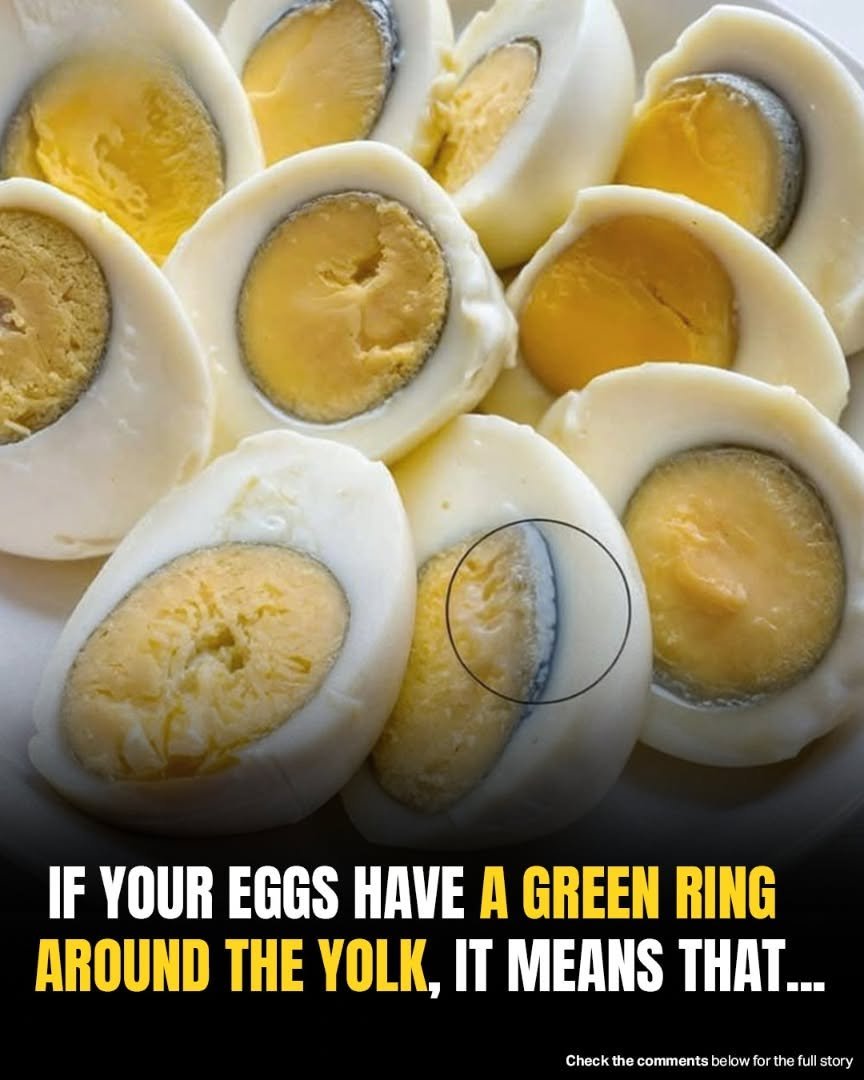
If you are one of those people who prefer their eggs hard-boiled, you have certainly noticed that green color ring around the yolk. Whether you like them scrambled, sunny-side up, or hard-boiled, eggs are an excellent choice because of many reasons. For one, they are high in protein, essential for muscle repair and growth. Further, eggs are rich in vitamins and minerals, with the yolk containing choline which supports the function of the brain. Also, they contain healthy fats and are low in calories, which makes them a great breakfast option for both little children and adults. If you are one of those people who prefer their eggs hard-boiled, you have certainly noticed that green color ring around the yolk. Now if you wonder if the eggs are safe to consume that way, the answer is yes. In fact, that green color comes from the sulfur in the egg white that reacts with the iron in the yolk due to overcooking. While this color is totally harmless, if you prefer your eggs without it, there is a way of cooking them by taking into consideration the cooking and cooling time. Place the eggs in a pot and cover them with cold water — about an inch or two above the eggs. Next, bring the water to a rolling boil over medium heat and then turn off the heat right away. Cover the pot and let the eggs sit in the hot water. If you prefer them with their yolk soft, keep them for 9 minutes. If firm eggs are your preferred choice, let them in the pot for 11 to 12 minutes. Once you take them out of the pot of hot water, place them into an ice-cold water for around five minutes. And yes, for smoother peeling, crack and peel them under running water. If you want to prevent cracking while boiling them, add a tablespoon of vinegar or a pinch of salt in the water. Boiled unpeeled eggs are safe to eat in a week time, while the peeled ones can be stored for 2 to 3 days before consuming. Read More>>>

Swollen Legs and Darkened Skin: Could These Be Signs of Poor Circulation?…Read More>

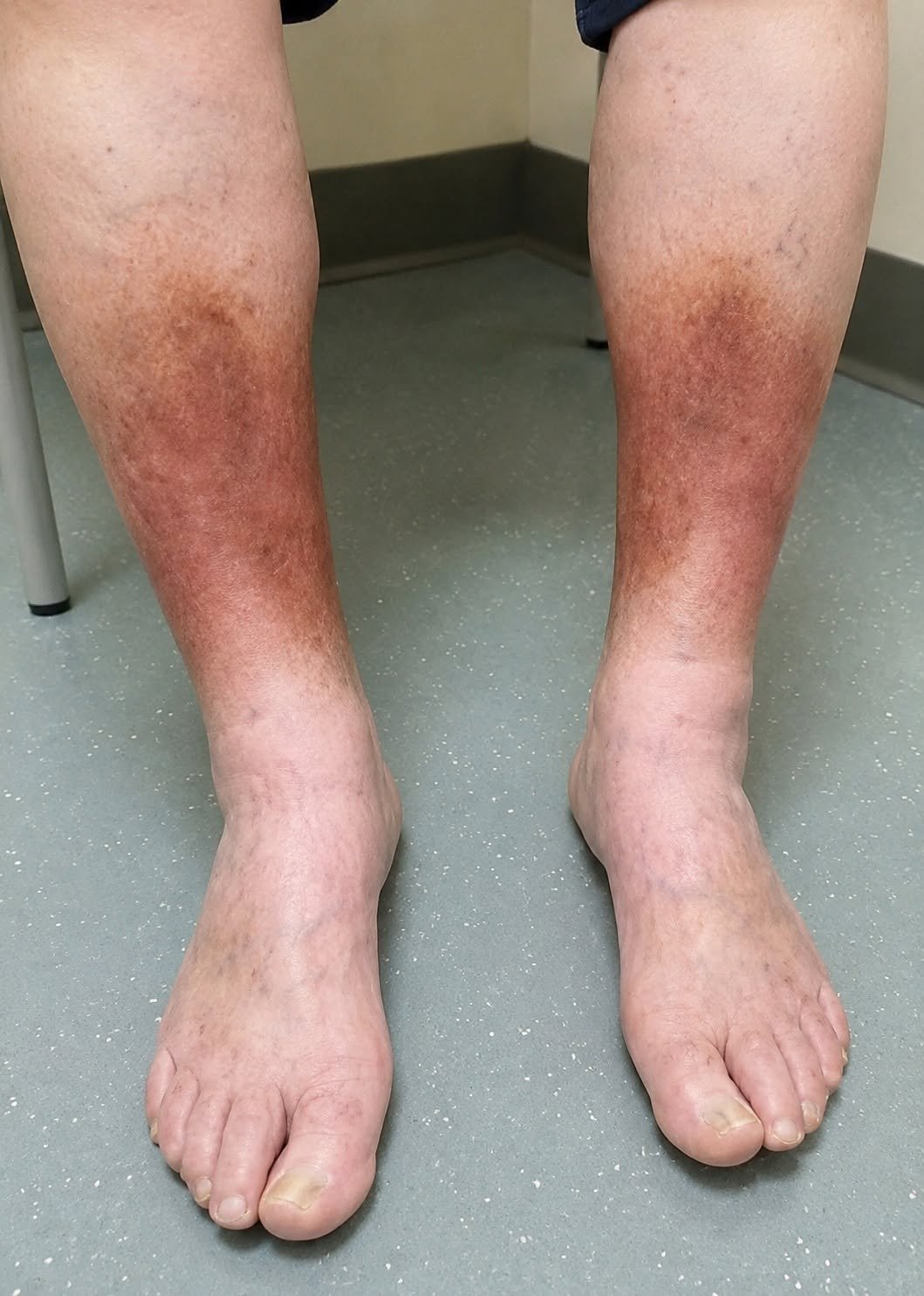
While chronic venous insufficiency develops slowly over time, there are certain symptoms that mean you should seek medical attention immediately, as they could point to a blood clot (Deep Vein Thrombosis, or DVT) or a heart issue: Sudden, severe swelling in only one leg. Pain, tenderness, or cramping in the calf or thigh (especially if it feels like a deep charley horse that won’t go away). Skin that is warm to the touch or noticeably red. Shortness of breath, chest pain, or a rapid heart rate (this is a medical emergency—call 911). Open sores or ulcers on the lower legs or ankles that are slow to heal. If you experience any of these, do not wait. Please call your doctor or go to urgent care/the ER right away. Gentle, Proactive Steps You Can Take at Home While you wait for your doctor’s appointment, there are several safe, old-fashioned, and science-backed habits you can adopt to support your circulation and ease discomfort. (And yes, a few of these involve things you already love!) 1. The “Legs Up the Wall” Rest Gravity is both the enemy and the solution here. Try to elevate your legs above the level of your heart for 15–20 minutes, 2 to 3 times a day. You can do this by lying on your back and propping your calves up on a few firm pillows or against the wall. This gives those tired veins a much-needed break and helps the pooled fluid drain back toward your heart. 2. Embrace Your Favorite Circulation-Boosting Foods You already know the power of the kitchen pharmacy! Beets: You’ve mentioned your interest in beets, and they are fantastic for this. Beets are rich in dietary nitrates, which your body converts into nitric oxide. Nitric oxide is a natural vasodilator—it literally helps relax and widen your blood vessels, promoting smoother, healthier blood flow. Ginger: Fresh ginger contains gingerol, which has mild blood-thinning and anti-inflammatory properties. Adding fresh grated ginger to your daily tea or meals is a wonderful, warming way to encourage healthy circulation. 3. Keep Moving (The Calf Pump) Your calf muscles act as a “second heart.” Every time you take a step or flex your ankle, those muscles squeeze the deep veins in your legs, pumping blood back up to your heart. If you sit for long periods, make it a habit to do “ankle pumps” (pointing and flexing your toes) every 30 minutes. 4. Ask Your Doctor About Compression Graduated compression socks are the gold standard for managing venous swelling. They are tightest at the ankle and gradually loosen as they go up the leg, physically helping to push the blood upward. However, please do not buy these without asking your doctor first, as they need to ensure you have adequate arterial blood flow before using them. Your Next Best Step My dear friend, please do not let this cause you midnight panic. Venous insufficiency is incredibly common, especially as we gracefully move through our 70s, and it is highly manageable. The absolute best thing you can do for your peace of mind is to call your primary care doctor this week. Tell them exactly what you told me: “I am noticing swelling in my legs and some darkening of the skin, and I want to have my circulation checked.” They will likely listen to your heart, check your pulses, and may order a simple, painless Doppler ultrasound of your legs to see exactly how the blood is flowing. You are doing everything right by paying attention to your body. Keep listening to it, keep asking great questions, and please let me know how your doctor’s appointment goes. I’m always right here at the kitchen table, ready to listen and support you. 💛 Read More>>>