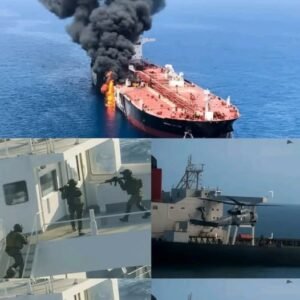
Over the past several years, international relations have entered a period of heightened tension. From Eastern Europe to the Middle East and across the Indo-Pacific, governments, analysts, and ordinary citizens alike are asking the same unsettling question: Is the world drifting toward a wider global conflict? While the idea of another world war captures public attention, most experts caution against alarmism. A global war is neither inevitable nor imminent. However, the international system is currently under strain from multiple overlapping crises, each carrying its own risks. These flashpoints are shaped not only by military power but also by political misjudgments, historical grievances, alliance pressures, and rapidly advancing technologies. Rather than one single trigger, today’s global security environment resembles a network of interconnected risks. A misunderstanding in one region could reverberate elsewhere. This article explores the major areas of concern—Europe, the Middle East, the Indo-Pacific, and the Korean Peninsula—while also examining why, despite rising tensions, global war remains unlikely and what factors could still threaten stability. Europe and Russia: Ongoing Pressure Along NATO’s Eastern Border The Ukraine Conflict and Its Broader Implications The war between Russia and Ukraine has fundamentally reshaped European security. More than two years after large-scale fighting began, the conflict shows no clear path to resolution. Military operations continue along shifting front lines, with both sides adapting tactics and technologies. Russia has made incremental territorial gains in certain areas, while Ukraine relies heavily on defensive strategies, long-range strikes, and external support. Drone warfare, missile attacks, and electronic warfare have become central features of the conflict, highlighting how modern wars differ from earlier ones. Despite occasional statements suggesting openness to negotiation, serious peace talks remain elusive. Both sides face domestic political pressures and strategic calculations that complicate compromise. NATO’s Heightened Vigilance Beyond Ukraine itself, European governments have grown increasingly alert to activity near NATO’s eastern borders. Reports of Russian aircraft approaching or briefly entering NATO-controlled airspace—particularly near Estonia, Poland, Romania, and the Baltic Sea—have raised concerns among alliance members. Although these incidents have not escalated into direct confrontation, NATO officials describe them as high-risk maneuvers that increase the chance of miscalculation. In an environment where military forces operate in close proximity, even minor errors can have serious consequences. Shifts in Defense Policy Across Eastern Europe Countries along NATO’s eastern flank have responded by reassessing their defense strategies. Nations such as Poland, Finland, Estonia, Latvia, and Lithuania have increased military spending, expanded troop readiness, and strengthened border defenses. Some governments have withdrawn from older arms-control or humanitarian agreements, arguing that changing security realities require greater flexibility. Others have invested in physical infrastructure, including fortified barriers and enhanced surveillance systems. These actions reflect a long-term shift in European security thinking, moving away from assumptions of lasting peace toward preparedness for sustained instability. Advanced Weapons and Strategic Signaling Another source of concern is Russia’s continued development of advanced missile systems. Public announcements regarding hypersonic weapons and nuclear-powered cruise missiles are often framed as technological achievements and deterrence signals. While much about these systems remains classified or uncertain, analysts agree that such developments are intended to reinforce Russia’s strategic posture. Western governments monitor these programs closely while emphasizing the need to prevent escalation through diplomatic channels. Why a NATO-Russia War Remains Unlikely Despite elevated tensions, most experts argue that a deliberate Russian attack on NATO territory is improbable. The political, economic, and military costs would be enormous, and the risk of uncontrollable escalation remains a powerful deterrent. Instead, analysts warn of gray-zone actions—ambiguous activities designed to test alliance unity without crossing clear red lines. Maintaining communication, alliance cohesion, and crisis-management mechanisms remains critical to preventing unintended conflict. The Middle East: Persistent Instability in a Volatile Region Fragile Ceasefires and Deep-Rooted Tensions The Middle East has long been a focal point of global security concerns, and recent years have done little to reduce its volatility. While ceasefires and diplomatic initiatives periodically pause active fighting, underlying political and social tensions remain unresolved. Conflicts involving Israel, Palestinian factions, and neighboring states continue to evolve, shaped by regional rivalries and international involvement. Diplomatic efforts led by global powers seek to limit violence, but progress is often fragile and easily reversed. Israel and Iran: A Carefully Managed Rivalry One of the most closely watched dynamics is the relationship between Israel and Iran. Though the two countries rarely engage in direct confrontation, their rivalry plays out through intelligence operations, regional proxies, and strategic signaling. Earlier exchanges of military strikes raised fears of wider escalation. However, both sides ultimately avoided actions that could trigger full-scale war, suggesting an understanding of the risks involved. Iran’s nuclear program remains a central concern. International monitoring organizations continue to track enrichment activities and stockpile levels, while diplomatic efforts fluctuate between engagement and stalemate. Regional Alliances in Transition The Middle East’s political landscape is also shifting. Some non-state actors that once wielded significant influence have seen their power decline due to internal divisions, local opposition, or changing regional priorities. These changes have prompted debates within regional capitals about long-term strategy, deterrence, and diplomatic engagement. For Iran, this has meant reassessing how best to project influence while avoiding direct confrontation with stronger military powers. The Role of the United States and Global Actors For the United States and its partners, the primary goal remains preventing a regional conflict from expanding. Maintaining stability in key areas, protecting trade routes, and preventing nuclear proliferation are central objectives. While diplomatic channels remain open, achieving lasting solutions has proven difficult. Many Middle East specialists note that, despite frequent flare-ups, most regional actors have strong incentives to avoid a war that could destabilize their own societies. China, Taiwan, and the Indo-Pacific: A Delicate Strategic Balance Why Taiwan Matters Globally Few geopolitical issues carry as much long-term significance as the relationship between China, Taiwan, and the United States. Taiwan occupies a critical position not only geographically but also economically, particularly in global semiconductor production. China considers Taiwan part of its territory and opposes any form of foreign military involvement. Taiwan, meanwhile, … Read more